Dana Keller · 6 November 2026
Havenfeld's Emerging Medical Hub Encounters Ancient Finds, Renewing Debates on Land Use Zoning
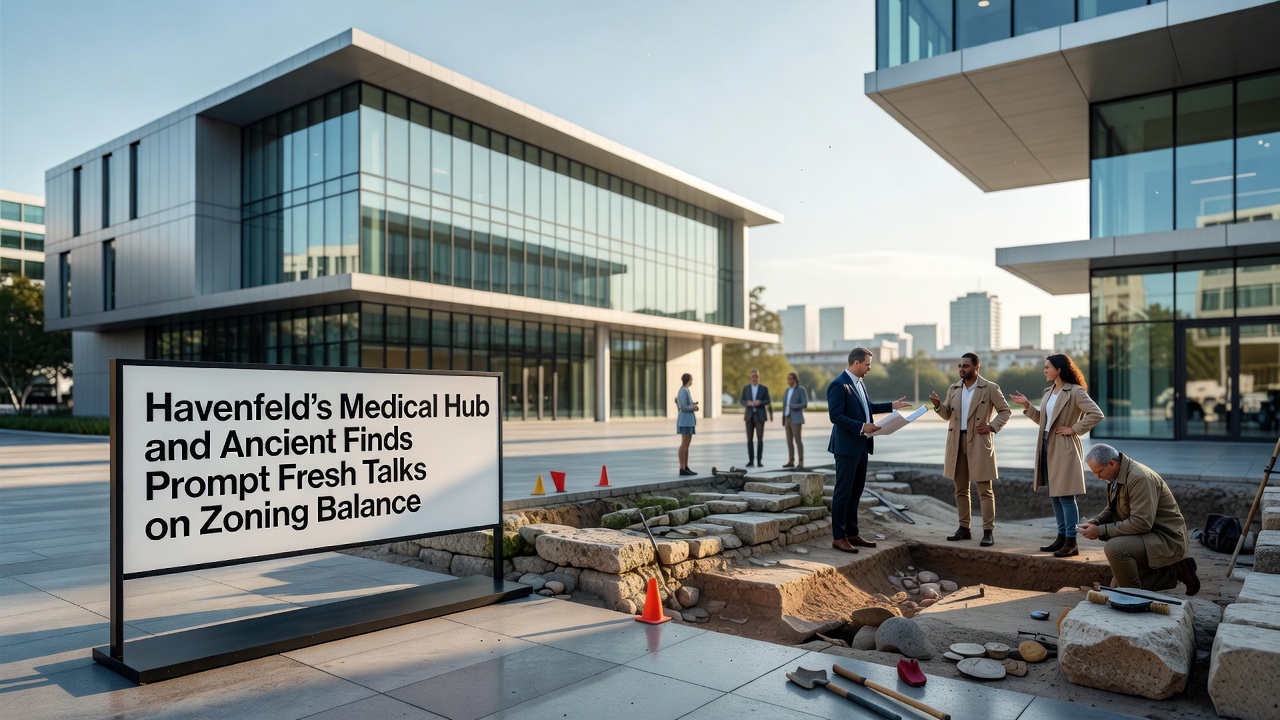
Construction crews in Havenfeld broke ground on a new medical hub earlier this year, yet the project has intersected with unexpected archaeological layers that date back several centuries, and this overlap has shifted attention toward zoning regulations that govern how development proceeds alongside heritage protection.
Officials have scheduled review sessions through November 2026 to examine how existing land use rules can accommodate both the medical facility and preservation requirements, while planners continue to map out adjustments that keep infrastructure timelines intact.
Project Background and Medical Hub Scope
The medical hub initiative centers on a multi-building complex designed to expand regional healthcare access, and it includes specialized clinics, diagnostic centers, and research labs that local authorities approved under current commercial zoning designations last spring.
Project documents list an expected completion window stretching into 2028, with initial phases focusing on outpatient services that address documented shortages in specialized care, and funding streams draw from both municipal bonds and private partnerships that target improved patient outcomes across surrounding districts.
Discovery of Ancient Artifacts and Timeline
Excavation work uncovered pottery fragments, structural foundations, and tool remnants during routine trenching operations in late October, prompting an immediate halt to heavy machinery in designated grid sections, while archaeologists from regional universities began cataloging items that suggest settlement activity from the medieval period onward.
By early November 2026, preliminary reports indicated multiple occupation layers spanning several hundred years, and these findings have triggered mandatory assessments under heritage guidelines that require site evaluation before further earth-moving continues.
Researchers have documented similar artifact clusters in nearby river valleys, which shows consistent patterns of early trade routes passing through the area, and the current finds add detail to those established records without altering core project boundaries.
Zoning Framework and Adjustment Processes
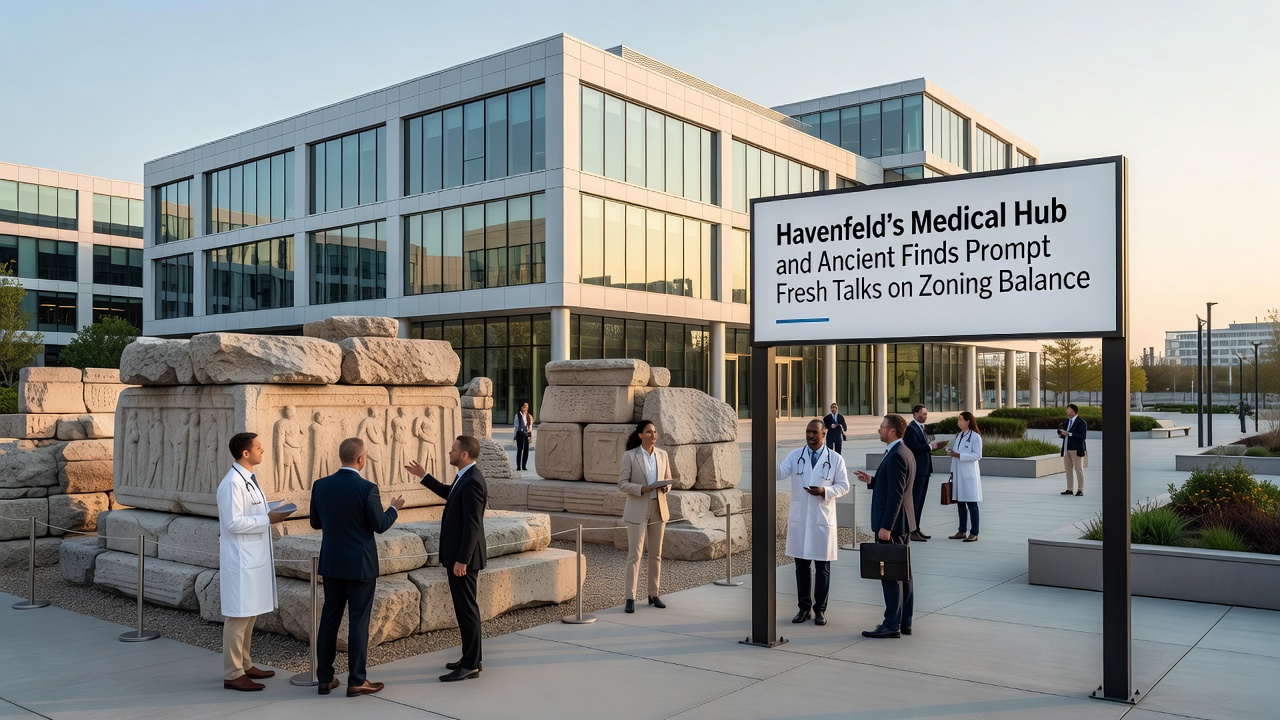
Current zoning ordinances classify the medical hub site as mixed-use commercial, yet heritage overlay provisions now apply across portions of the parcel where artifacts appear, and this dual designation requires coordinated input from planning boards and cultural resource managers to resolve potential conflicts.
Meetings scheduled for November 2026 will review proposals that include buffer zones around excavation areas, modified building footprints, and phased construction sequences that allow continued archaeological work, while data from comparable European sites indicate that such integrations often extend timelines by six to twelve months yet preserve both development goals and historical context.
One case study from a comparable Australian regional project revealed that integrating preservation requirements into hospital expansions led to redesigned access roads and green spaces that satisfied all parties, and Havenfeld planners have referenced those outcomes during preliminary discussions.
Stakeholder Input and Data Considerations
Local health officials emphasize that delays in the medical hub could affect service delivery metrics already tracked by regional health authorities, whereas heritage advocates point to the educational value of on-site interpretation centers that have proven successful in other municipalities.
Figures from the Statistics Canada urban development reports show that balanced zoning approaches in growing communities correlate with sustained economic activity across sectors, and similar patterns appear in preliminary Havenfeld modeling.
Additional analysis from the World Health Organization infrastructure guidelines underscores how healthcare facilities benefit from proximity to stable land use frameworks that accommodate future expansions without repeated regulatory hurdles.
Next Steps and Ongoing Monitoring
Survey teams continue non-invasive scanning across the full site footprint to identify any additional concentrations of material, and results will feed directly into the November zoning sessions where revised maps and compliance checklists are expected to take shape.
Community information sessions have been announced to share updated timelines and preservation strategies, allowing residents to review how the medical hub design evolves while accounting for the ancient layers beneath the surface.
Conclusion
Havenfeld's medical hub project now operates under an expanded set of considerations that incorporate both healthcare delivery needs and archaeological preservation requirements, and the November 2026 discussions will determine how zoning balances these elements moving forward. Ongoing documentation and adjusted construction phases reflect standard practices observed in comparable developments, while data from established sources guide the process toward integrated outcomes.