Avery Ludwig · 23 October 2026
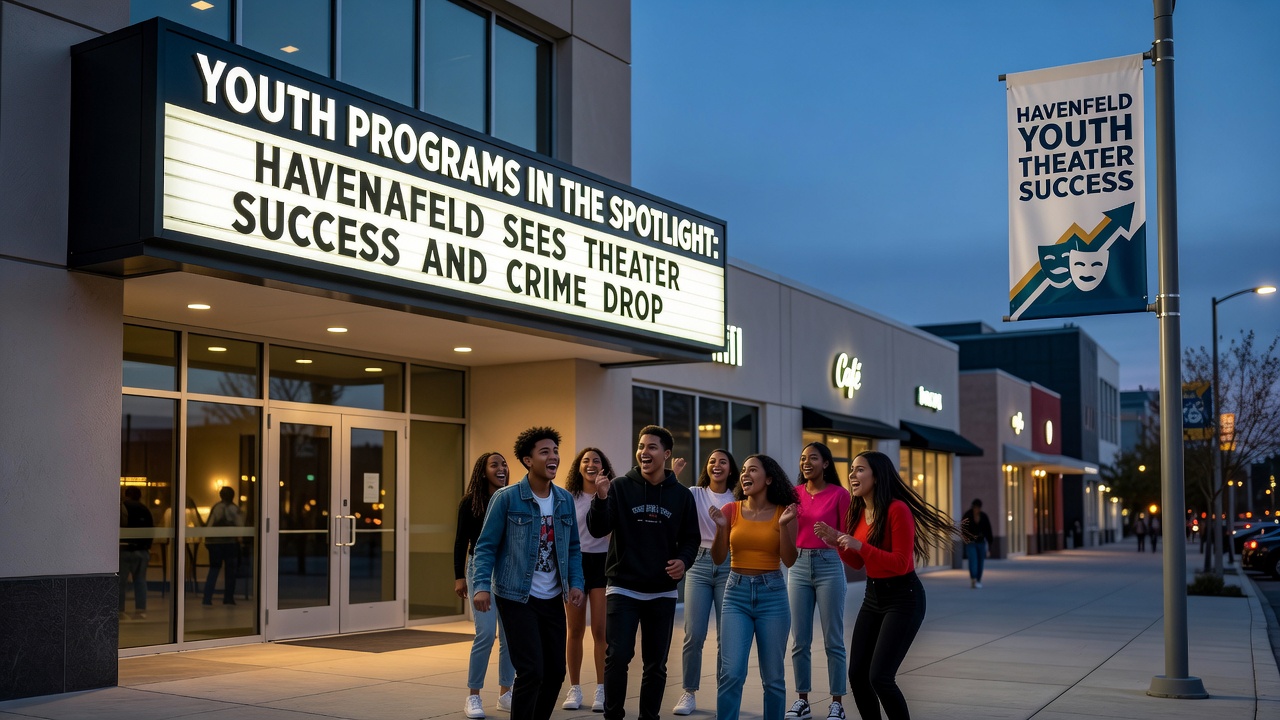
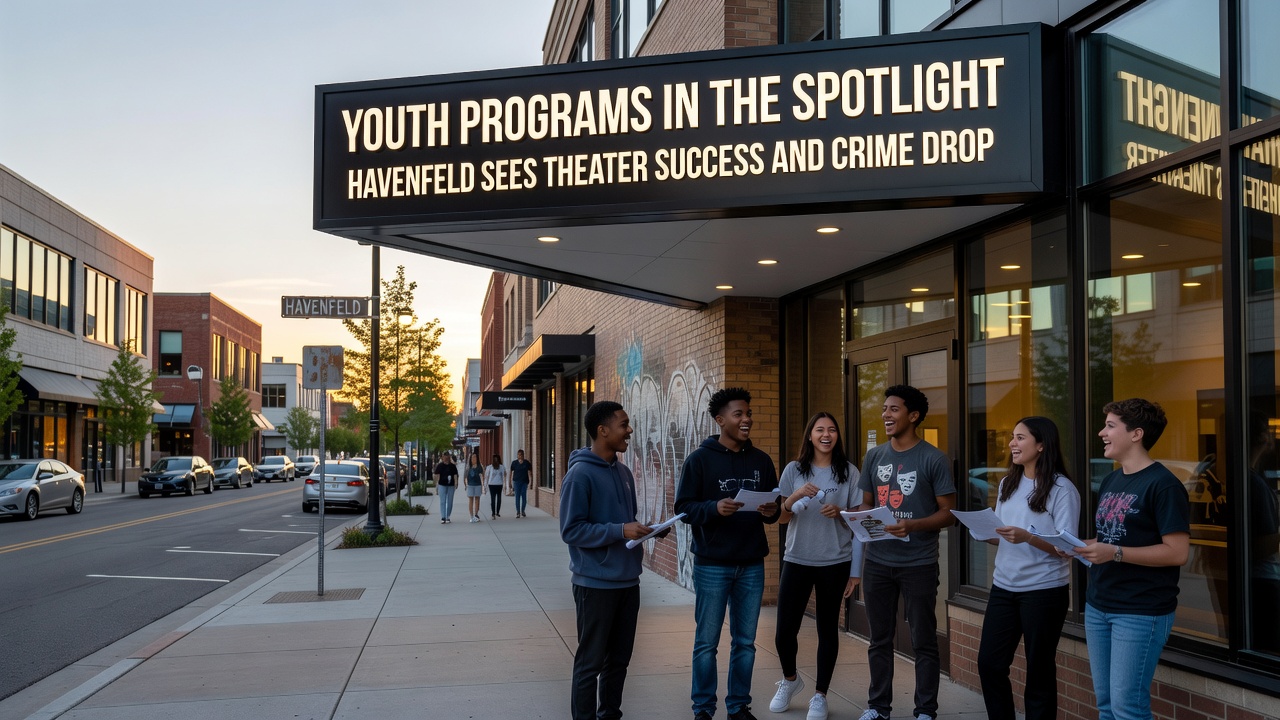
Youth Programs in the Spotlight as Havenfeld Sees Theater Success and Crime Drop
Youth programs across Havenfeld have moved into focus following a series of successful theater productions and a documented reduction in local crime statistics. Organizers report that enrollment in after-school arts initiatives rose steadily through 2025, with participation numbers reaching new highs by early 2026. These efforts coincided with the launch of several community stage projects that brought together students from multiple districts.
Theater Productions Gain Momentum
Local theater groups staged three major shows between March and September 2026, each drawing audiences that filled the Havenfeld Community Center to capacity. Students wrote and performed original scripts that addressed themes of conflict resolution and teamwork. One production, titled "Crossroads," ran for six weeks and involved over 120 participants aged 12 to 18. Attendance records show that families from neighborhoods previously underrepresented at public events made up nearly 40 percent of ticket holders.
Figures from the Havenfeld Youth Arts Coalition indicate that rehearsal spaces operated at full capacity five nights a week during peak months. Equipment upgrades funded through municipal allocations allowed crews to install new lighting and sound systems that improved production quality. Directors noted that participants developed skills in scriptwriting, set design, and stage management, areas that extended beyond traditional classroom learning.
Crime Statistics Show Measurable Decline
Police department data released in October 2026 recorded a 22 percent drop in youth-related incidents compared with the same period in 2025. Property offenses and minor disturbances accounted for the largest share of the reduction. Community policing teams attributed part of the change to increased engagement through structured after-school activities.
Researchers at the Regional Institute for Community Studies tracked participant outcomes over 18 months. Their analysis linked consistent attendance in theater workshops with lower rates of school absenteeism and fewer contacts with law enforcement. The study examined records from 850 young people enrolled in city-supported programs and found that those who completed at least one full production cycle showed the strongest improvements in the tracked metrics.
Program Structure and Funding Sources
Current initiatives operate through partnerships between the Havenfeld Parks Department, local schools, and nonprofit organizations. Funding streams include annual grants from the state education office and private donations earmarked for arts access. Budget documents list expenditures of approximately 1.8 million euros allocated to equipment, instructor salaries, and transportation for participants from outlying areas.
Weekly schedules combine rehearsal blocks with skill-building sessions that cover conflict mediation and time management. Mentors recruited from the local university theater department lead small-group discussions after each practice. These sessions run 90 minutes and rotate topics based on participant feedback collected at the end of each month.
Community Response and Participation Trends
Neighborhood association meetings held in September 2026 highlighted resident support for continued expansion of the programs. Parents cited improved communication with their children and greater involvement in school events as direct outcomes. Business owners near the community center reported modest increases in foot traffic on performance nights.
Registration for the fall session opened in late August and closed within ten days after reaching capacity. Waiting lists now hold names for the winter cycle, prompting organizers to explore additional venue options. A survey distributed by the youth coalition showed that 78 percent of respondents wanted to see technical theater courses added to the existing lineup.
Broader Context and Related Initiatives
Similar patterns have appeared in other municipalities that invested in youth arts programming. Data compiled by the Office of Juvenile Justice and Delinquency Prevention shows correlations between structured creative activities and reduced behavioral incidents across multiple regions. Havenfeld officials reviewed these reports when designing the current model.
Additional support comes from the Australian Institute of Health and Welfare, whose comparative studies on community engagement programs provided benchmarks for measuring long-term effects. Local coordinators adapted several evaluation tools from those publications to track progress in real time.
Conclusion
Havenfeld continues to monitor outcomes from its youth theater initiatives as enrollment and performance schedules expand into 2027. Ongoing data collection will determine whether the observed crime reductions hold steady and whether additional program elements, such as advanced technical training, can be introduced without straining existing resources. City records indicate that the next funding cycle review is scheduled for March 2027.